
New approach-capable GPS navigator in X-Plane 10.30
X-Plane has been lacking a decent navigation solution for general aviation aircraft for a long time. The built-in GNS430 instrument could only do direct-to navigation and not use X-Plane’s FMS plans, making long IFR flights inconvenient.
In X-Plane 10.30 we are introducing a new generation of the X-Plane 430 GPS navigator, modeled more closely after the Garmin 430W that is very popular in general aviation aircraft. The 430W is a popular aftermarket GPS replacement in many older general aviation aircraft, because it is approved for WAAS approaches and thus an easy upgrade to allow flying instrument approaches at lots of smaller airports without ILS.
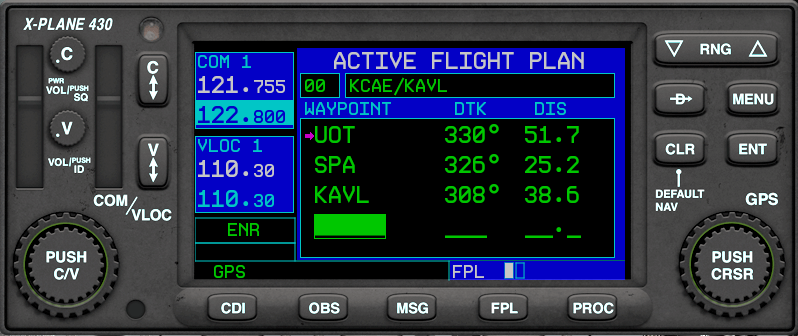
The new X-Plane unit can create and fly multi-leg flightplans in addition to the direct-to function:
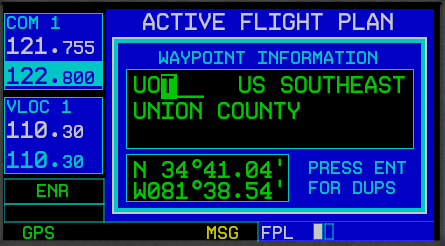
You can create directs or flight plans using a worldwide database of airports, fixes and navaids:
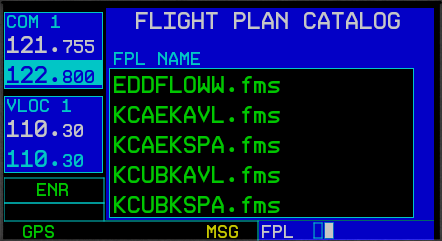
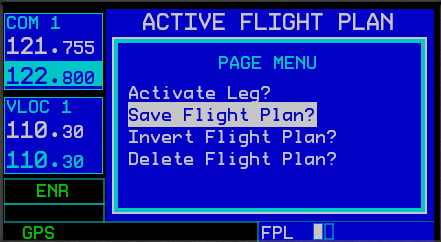
Loading or saving the route works using the X-Plane FMS format. Many online services for virtual flight planning are compatible with that:
You can then navigate along your flight plan using one of different map views that provide situational awareness:
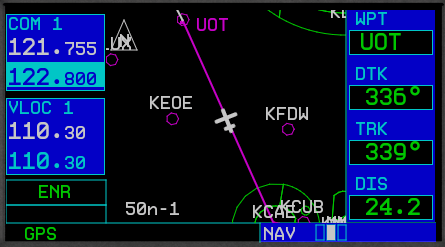
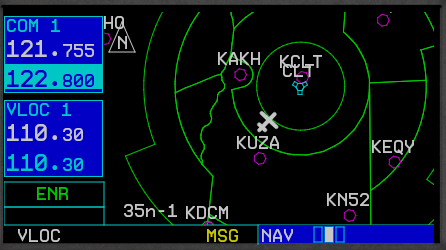
While flying under VFR, stay alert to any Bravo, Charlie, Delta or special use airspace in the United states (open database, user-expandable):
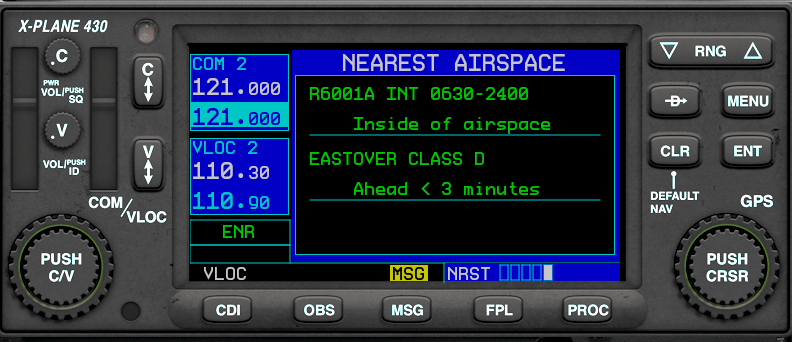
You will be warned when you are about to violate an airspace:
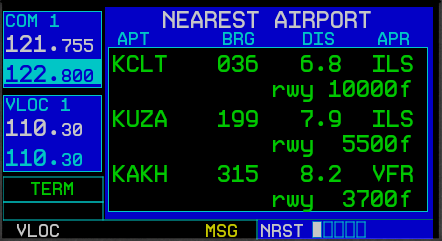
using the nearest airport function you always know your nearest alternatives for landing (though we all know X-Avion does a much better job at that!)
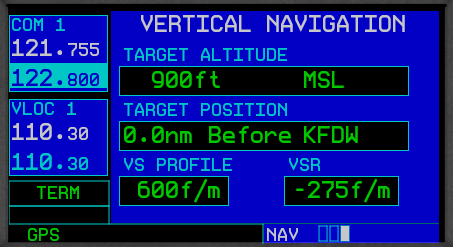
With a little help from your friend, knowing when to start your descend becomes easy:
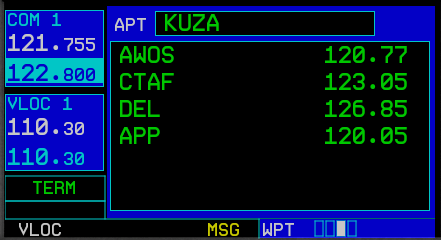
Before landing, always know who to call:
For IFR approaches, load precision and non-precision approaches from a world-wide, updatable database:
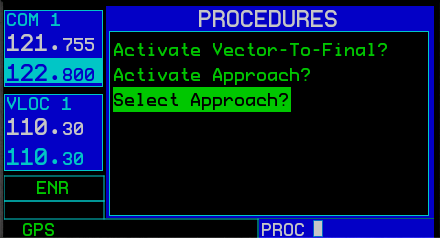
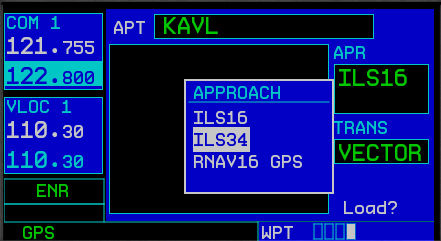
Review approach transitions and initial approach fixes:
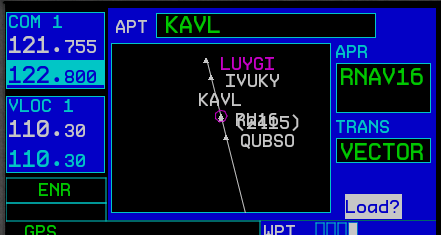
and then load any approach and transition into your flight plan:
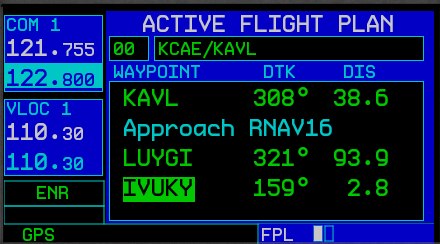
Under ATC (read: when flying online) the vector-to-final function will often be used instead of a transition:
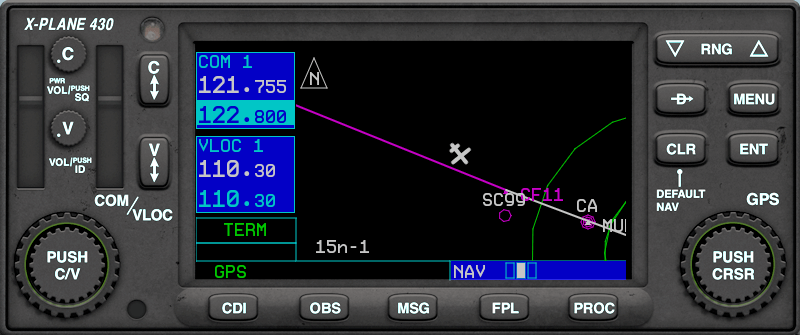
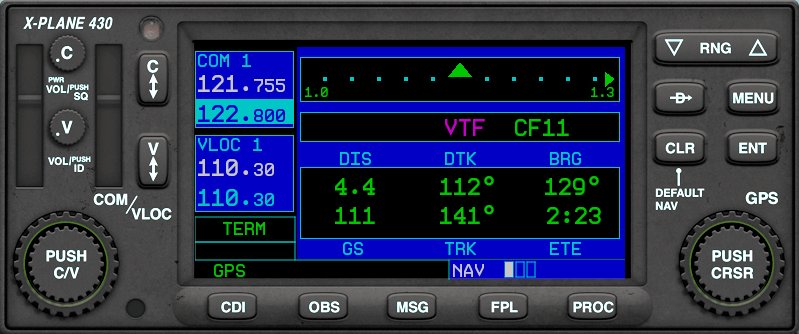
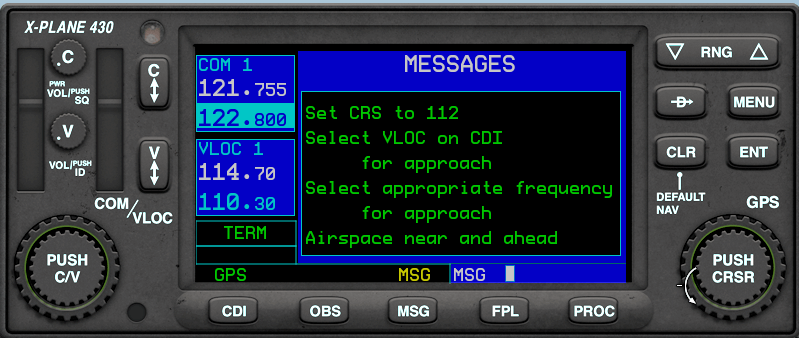
The X-Plane 430 is there to help you stay alert to common errors in approach navigation:
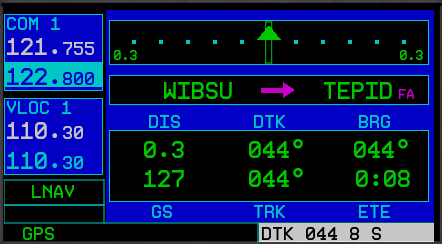
The GPS is capable of flying non-precision GPS-approaches with a localizer-like guidance and varying CDI sensitivity:
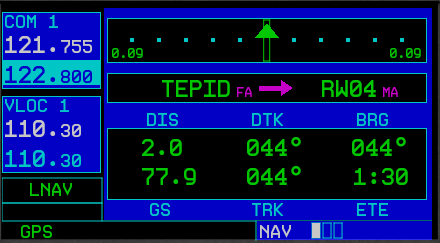
If you don’t see the runway at the minimum descend altitude, continue to the missed approach point and the flight plan sequencing will go into suspend. At the missed approach point, if you still don’t see the runway, begin your missed approach:

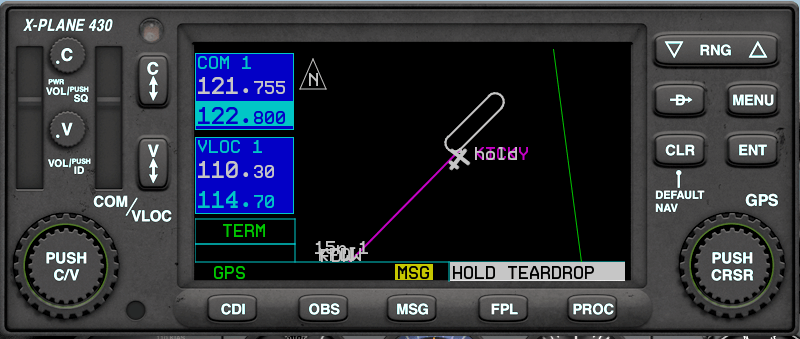
and then get help choosing the right entry to the missed approach holding:
The new GNS430 is a drop-in replacement for the old one, so every X-Plane aircraft equipped with the GNS430 automagically becomes more IFR-capable with the 10.30 update. We also provide an additional instrument in style of the bigger GNS530, that designers can use in their aircraft starting with Plane-Maker 10.30. It also allows for dual installations that can either use separate flight plans or cross-fill.
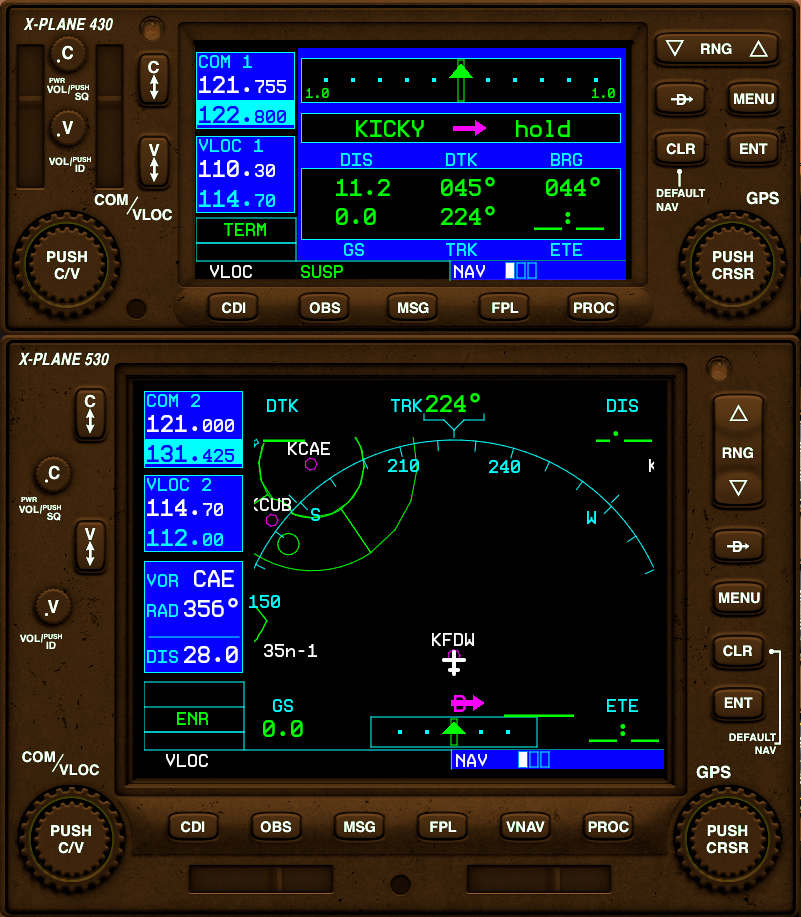
The interaction of the GPS with the rest of the panel, especially the CDI and the autopilot, has been improved, offering a few more options for aircraft designers. Two additional posts explaining the new options in Plane-Maker will follow shortly.
The database from which approaches are loaded is provided by Aerosoft. A current database will be provided once with X-Plane 10.30, and further updates will be available on a subscription basis.
You might have noticed stupid COM frequencies in some screenshots. This is not a bug, but a feature: X-Plane 10.30 supports 8.33kHz channel spacing, that is now mandatory in the European upper airspace and will become more important over the next few years.
For the inevitable question “will it have X and does it simulate Y?” I do have one answer:
I chose the feature-set for the 10.30 release carefully to fulfill two requirements:
- It must simulate the functions I use every day. After spending about 40 hours flying a C172P with this equipment, I have developed some pattern in day-to-day use. The simulated equipment must have the functions I use every day.
- It must simulate what I need for my IFR checkride preparation. I’m currently studying for the instrument rating. All IFR GPS functions that are needed during the lessons must be simulated so I can use X-Plane to practice at home.
This does not cover all functions of the real unit, but it covers what the pilot absolutely needs every day.